In today’s organizations, work rarely happens within clear reporting lines. Projects span functions, teams operate across silos, and results depend on people who do not report directly to you. In this environment, influencing without authority is not optional — it is essential. Yet many professionals struggle to do it effectively, often relying on a single…
-
-
Influencing without authority is one of the most challenging capabilities in modern organizations. Most professionals understand that they need to collaborate, align and build relationships to achieve results. However, in practice, many fall into common patterns that reduce their effectiveness. These mistakes are rarely intentional. They are often the result of relying on instinct rather…
-
Influence is one of the most frequently used — and least clearly understood — concepts in the workplace. Most professionals recognize that they need to influence others to get things done, especially in complex and cross-functional environments. However, influence is often confused with persuasion, authority or even personal charisma. This lack of clarity leads to…
-
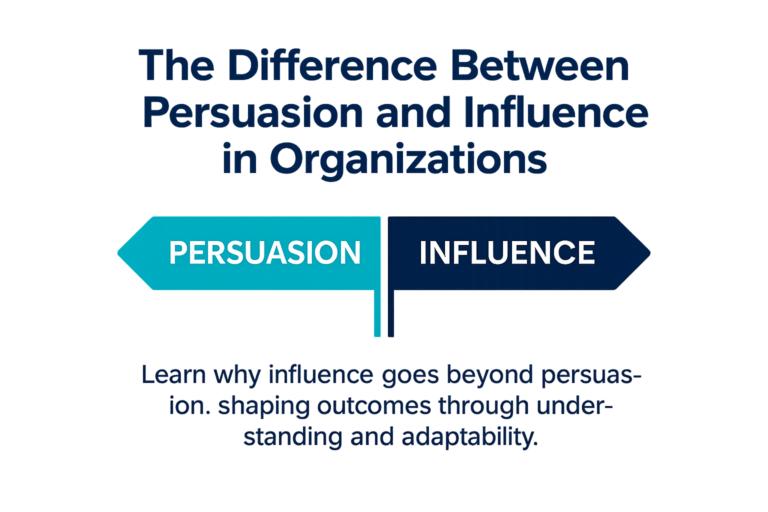
In many organizations, persuasion and influence are often used interchangeably. Professionals are expected to communicate effectively, align stakeholders and drive decisions — yet the distinction between persuading and influencing is rarely made explicit. This lack of clarity leads to behaviours that can limit effectiveness, especially in complex and cross-functional environments. Understanding the difference between persuasion…
-
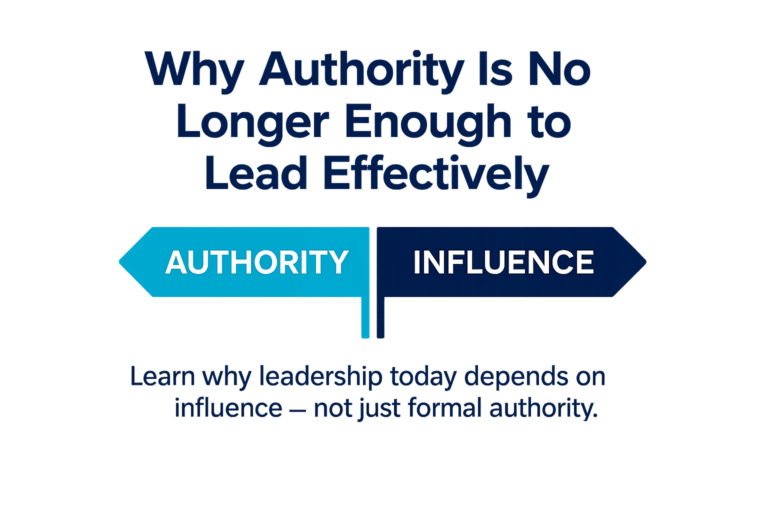
Leadership has traditionally been associated with authority. Formal roles, decision-making power and hierarchical position have long defined how leaders operate within organizations. However, in today’s environment, authority alone is no longer sufficient to lead effectively. Organizations have become more complex, more interconnected and less hierarchical. Work increasingly depends on collaboration across functions, teams and geographies….
-
Collaboration is often presented as a key priority in modern organizations. Teams are expected to work across functions, align stakeholders and execute in increasingly complex environments. However, despite these expectations, many organizations still struggle with silos, resistance and lack of alignment. These challenges are rarely the result of structure alone. They are often driven by…
-
Leaders are often expected to deliver results while maintaining strong relationships. In practice, these two objectives are frequently treated as competing priorities. Some leaders focus heavily on driving outcomes, often at the expense of collaboration and engagement. Others prioritize relationships, but struggle to create clarity, direction or momentum. Effective leadership requires the ability to balance…
-
When collaboration breaks down in organizations, the immediate response is often structural. New processes are introduced, reporting lines are adjusted, and roles are redefined. While these changes can help, they rarely solve the underlying issue. Collaboration is not driven by structure alone. It is shaped by how people interact, communicate and influence each other on…
-
Organizations invest significant resources in change initiatives. New strategies, structures and processes are designed to improve performance and adapt to evolving market conditions. However, despite these efforts, many change initiatives fail to deliver their intended outcomes. This is often attributed to poor planning, weak execution or resistance from employees. While these factors play a role,…
-
Difficult conversations are an unavoidable part of working in modern organizations. Whether it is addressing performance issues, managing conflicting priorities or navigating disagreement between stakeholders, these situations require careful handling. Many professionals either avoid these conversations or approach them in a way that creates tension and resistance. As a result, issues remain unresolved, relationships are…