How to Influence Without Authority in Cross-Functional Teams
In today’s organizations, work rarely happens within clear reporting lines. Projects span functions, teams operate across silos, and results depend on people who do not report directly to you. In this environment, influencing without authority is not optional — it is essential. Yet many professionals struggle to do it effectively, often relying on a single communication style that creates resistance rather than alignment. Understanding how to influence across boundaries is what separates coordination from real execution.
Why influence becomes difficult in cross-functional teams
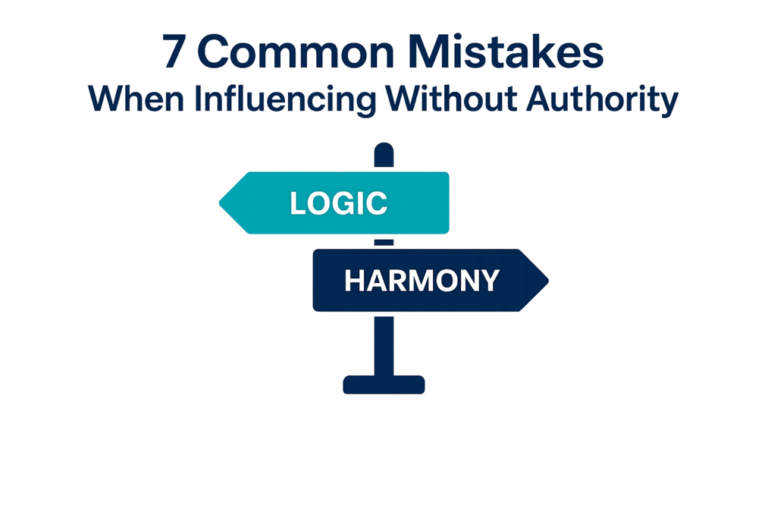
Cross-functional environments introduce complexity that traditional leadership approaches are not designed to handle. Different priorities, competing objectives and limited formal authority make alignment harder to achieve. Professionals often default to one of two ineffective approaches. Some push too hard, focusing on logic and direction without building engagement. Others avoid tension, prioritizing relationships but failing to create clarity or momentum. In both cases, influence breaks down.
What effective influence requires
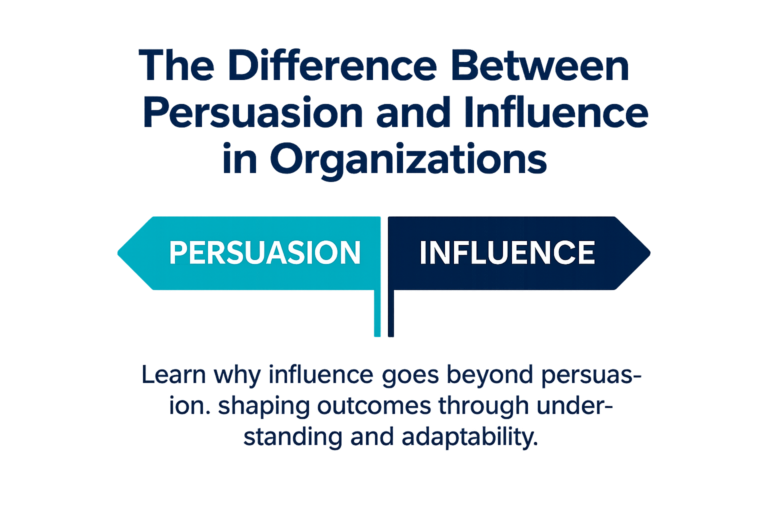
Influencing without authority is not about being more persuasive or more collaborative. It is about being able to adapt your approach to the situation. Different stakeholders require different influence strategies. Some situations call for clarity, direction and assertiveness. Others require listening, alignment and relationship building. Effective professionals understand when to adjust their approach — and how to do it consciously.
Balancing push and pull in real situations
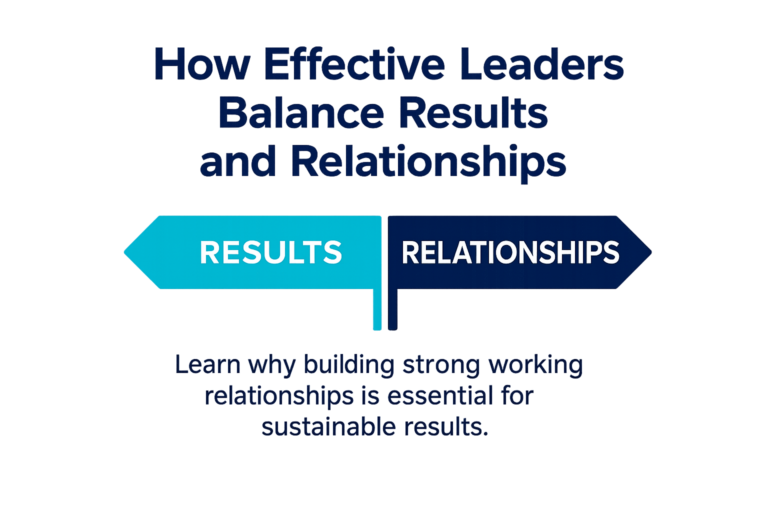
At the core of effective influence is the ability to balance two complementary approaches. Push behaviours help move situations forward through clarity and direction. Pull behaviours help build engagement, trust and shared understanding. Relying too heavily on one side creates problems. Too much push leads to resistance and tension. Too much pull leads to lack of direction and slow execution. The key is not choosing one over the other, but learning how to combine them effectively.
Applying influence in cross-functional environments
In practice, influence happens through everyday interactions. Leading meetings, aligning stakeholders, managing expectations and navigating disagreement all require conscious influence choices. The most effective professionals do not rely on instinct alone. They understand the dynamics at play and adapt their behaviour to achieve both results and positive working relationships. This is what allows teams to move from coordination to real collaboration.
To go deeper into how influence works in practice, explore the Influence Model®