How to Navigate Difficult Conversations Using Influence Skills
Difficult conversations are an unavoidable part of working in modern organizations. Whether it is addressing performance issues, managing conflicting priorities or navigating disagreement between stakeholders, these situations require careful handling. Many professionals either avoid these conversations or approach them in a way that creates tension and resistance. As a result, issues remain unresolved, relationships are strained and progress slows down. Navigating difficult conversations effectively is not just a communication challenge. It is fundamentally an influence challenge.
Why difficult conversations are often avoided
Difficult conversations introduce uncertainty. They involve potential conflict, differing perspectives and the risk of damaging relationships. As a result, many professionals choose to delay or avoid them altogether. While this may feel safer in the short term, it often leads to greater problems. Misalignment develops, expectations remain unclear and frustration increases. Avoiding the conversation does not remove the issue — it amplifies it over time.
The risks of handling them poorly
When difficult conversations do take place, they are often handled in ways that reduce their effectiveness. Some individuals take a highly direct approach, focusing on facts and expectations without considering how the message is received. This can create defensiveness and resistance. Others prioritize maintaining the relationship and avoid addressing the issue clearly. This leads to ambiguity and lack of progress. In both cases, the conversation fails to achieve its objective.
Understanding difficult conversations as influence situations
Difficult conversations are not simply about delivering a message. They are about shaping how the other person understands, interprets and responds to the situation. This makes them influence situations. Effective handling requires more than clarity. It requires:
understanding the perspective of the other person adjusting your approach depending on the context balancing direction with engagement
This is where influence becomes critical.
Balancing clarity and engagement
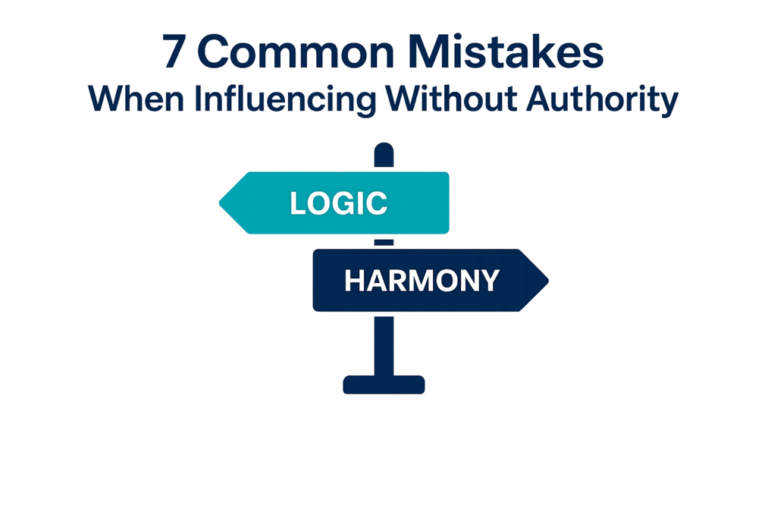
At the core of effective difficult conversations is the ability to balance two key elements. Clarity ensures that expectations, issues and next steps are clearly articulated. Engagement ensures that the other person feels heard, understood and involved. Too much focus on clarity can create tension and defensiveness. Too much focus on engagement can result in unclear outcomes. Balancing both is what allows the conversation to be both constructive and effective.
Applying influence in real conversations
In practice, navigating difficult conversations requires conscious choices. Professionals need to:
create a clear point of view invite and understand different perspectives adapt their approach as the conversation evolves maintain focus on both the issue and the relationship
This is not about following a script. It is about understanding the dynamics of the conversation and responding intentionally.
From avoidance to capability
Many professionals rely on instinct when handling difficult conversations. Some avoid them, others approach them too directly. Developing influence skills helps move beyond instinct. It provides a structured way to navigate these situations with confidence. Over time, this turns difficult conversations from a source of tension into an opportunity for alignment and progress.
What effective conversations look like
When influence is applied effectively, difficult conversations become more productive. Issues are addressed clearly without creating unnecessary tension. Different perspectives are explored without losing direction. Outcomes are defined while maintaining strong working relationships. This is what allows organizations to resolve problems quickly and move forward.
To understand how to apply influence in difficult conversations and everyday interactions, explore the Influence Model®.